A wood stove that's too small will struggle through the coldest week of the year, running flat out and still leaving you in a jumper. One that's too big will turn your living room into a sauna within half an hour, and you'll spend the evening opening windows in January. Sizing is mostly straightforward arithmetic, with a bit of judgement about the building you actually live in. Get it roughly right and everything else — fuel use, smoke, comfort — falls into place.
How much heat does your room need?
Heat output is measured in kilowatts (kW). Every stove sold in the UK carries a nominal output, and often a range, such as 4–7 kW. Your job is to estimate roughly how many kilowatts your room loses on a cold day, then choose a stove whose comfortable operating point sits in that region.
For a single room, installers tend to use a rule of thumb rather than a full heat loss calculation. In a reasonably insulated room, allow about 1 kW for every 14 cubic metres of space. If the room is draughty, single glazed or has solid walls with no insulation, work on 1 kW per 10 cubic metres instead.
Volume, not floor area, is what matters. Measure length, width and ceiling height in metres and multiply them together. A typical sitting room at 5m by 4m with a 2.4m ceiling comes to 48 cubic metres. Divide by 14 and you get roughly 3.5 kW; divide by 10 and you get closer to 5 kW. That gap between the two figures is the real-world uncertainty you're working with.
Adjusting for insulation, glazing and draughts
Older and period homes
Solid brick walls, sash windows with a rattle, an open chimney and a front door that lets in the wind all push you towards the higher end of your estimate. A Victorian terrace room might genuinely need 5 kW where an equivalent modern room needs 3.5 kW. Sealing obvious draughts, hanging heavy curtains or adding secondary glazing before you buy will do more for your comfort than buying a bigger stove.
Modern, airtight homes
Newer houses hold their heat. If your home is well insulated and fairly airtight, a small stove of 4 or 5 kW will usually be plenty, and a large one will simply overheat the room. Airtight homes also need to think about air supply, because a stove has to draw combustion air from somewhere. Building Regulations in England and Wales require permanent ventilation for appliances rated above 5 kW, and a direct air kit — which draws air from outside straight into the stove — is worth asking your installer about.
Ceiling height, open plan and stairwells
Volume accounts for high ceilings, but it doesn't account for how heat behaves in a tall room. Warm air rises and sits above head height under a 3.5 metre ceiling, so you may need slightly more output than the raw volume suggests. A ceiling fan to push that warm air back down is often the cheaper answer.
Open plan spaces and rooms with a staircase are a different problem. Heat drifts towards the stairs and up to the landing, and a stove sized on floor area alone will feel underpowered exactly where you're sitting. Resist solving this with a much bigger stove: you'll burn more wood, overheat the near side of the room and still have a cool corner by the sofa. A modest stove in a well-chosen spot, with realistic expectations, usually works better.
What the UK climate actually changes
British winters are mild by northern European standards, but they're long, damp and hard to predict. The season when a stove earns its keep isn't the depths of January — it's the damp weeks in October and April when you want a small, clean fire for a few hours in the evening.
That shapes your sizing decision. A stove that's too big has to be run hard or not at all, and running it slowly is what causes smoky glass, tar in the flue and poor efficiency. A model with a modest nominal output and a good turn-down range will serve you far better through a British shoulder season than a high-output stove you only dare light during a cold snap.
Two other UK-specific points are worth checking first. If you live in a Smoke Control Area — and most English towns and cities include one — you may only burn authorised fuels or use a DEFRA-exempt appliance. And whatever you choose, burn dry wood: kiln-dried logs with a moisture content under 20%, ideally carrying the Ready to Burn mark. Wet wood wastes most of its energy boiling off water.
Reading a stove's specification
Once you have a kilowatt figure in mind, the spec sheet becomes far easier to read. Look for:
- Nominal output — the manufacturer's stated figure, and the one installers and Building Regulations work from.
- Output range — how far the stove turns up and down. A wide range is more useful than a high maximum.
- Efficiency — a percentage; higher means more heat from each log.
- DEFRA exemption — essential if you're in a Smoke Control Area.
- Maximum log length — measure your log store before you commit.
- Flue diameter and exit — 125mm or 150mm is typical; top or rear exit changes how the flue runs.
- Clearances — minimum distances to combustible walls and furniture, which will shape where the stove can go.
Before you buy
Work through this in order and you'll be close enough to choose with confidence:
- Measure the room's length, width and ceiling height, and multiply for volume.
- Judge the insulation: well insulated, average, or draughty and single glazed.
- Divide the volume by 14 or 10 accordingly for a rough kW figure.
- Add a little if the room is open to stairs or has a very high ceiling.
- Compare your figure with stoves' nominal output, not their maximum.
- Check the practical fit: hearth size, clearances, flue route, log length and air supply.
Sizing a stove is a rough calculation rather than an exact science, and the final decision is best confirmed by someone who can see your home. A HETAS registered installer will check the flue, the ventilation and the hearth, and confirm what Building Regulations and any Smoke Control Area rules require in your case. Have that conversation before you fall for a particular stove — it's far easier to change your mind now than after the hearth has been cut.
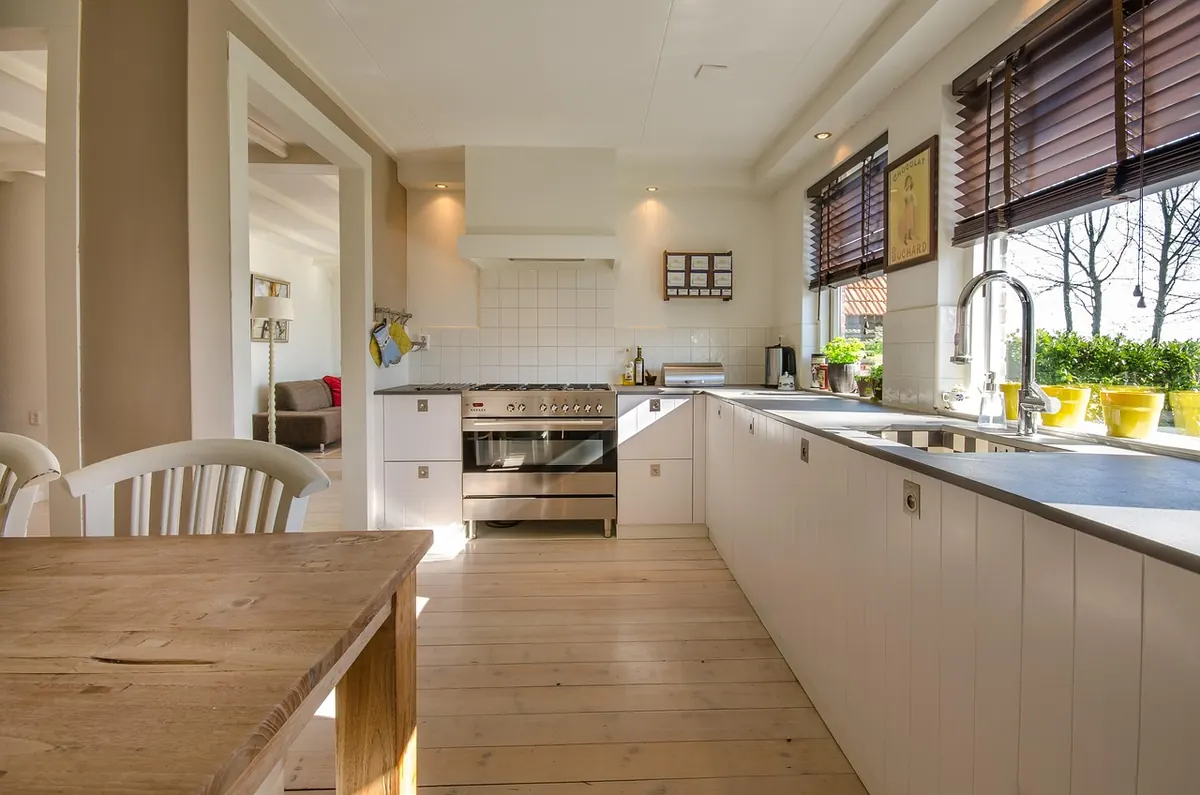
Photo: ClickerHappy / Pixabay